






















Introduction
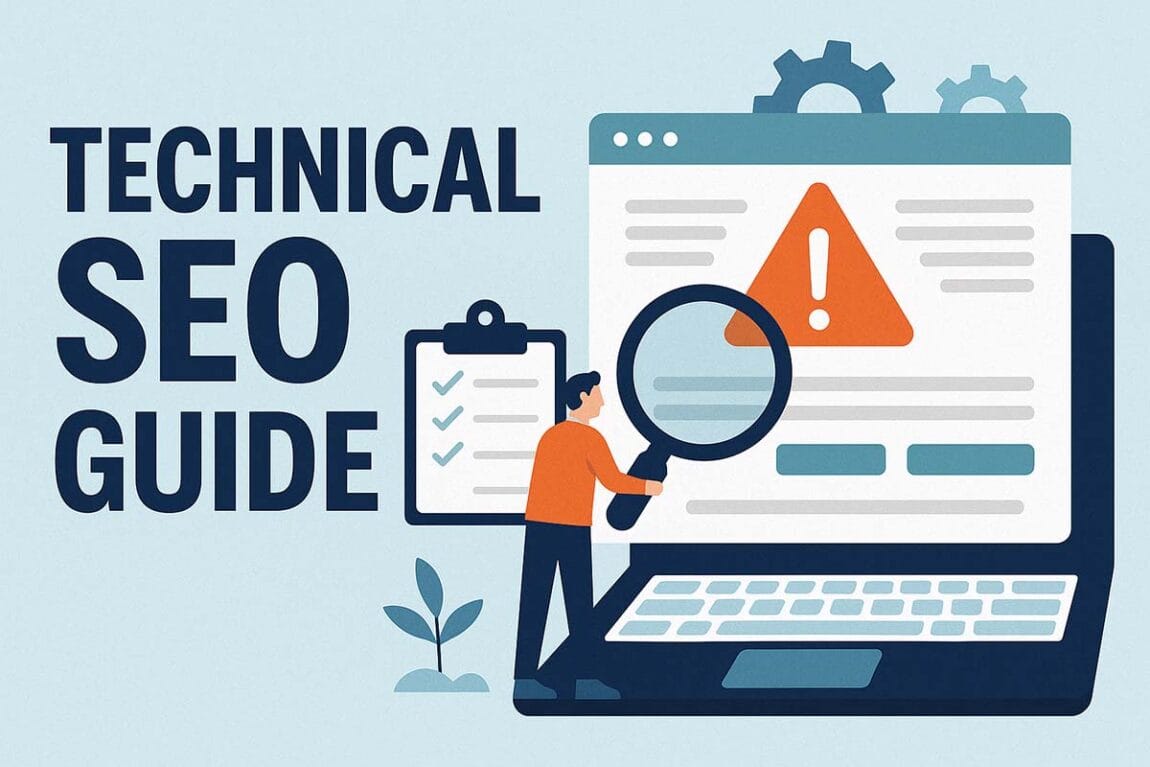
Your website could publish brilliant content and still lose rankings if search engines struggle to crawl, render, or index your pages. That’s where technical health becomes the foundation of everything else. This guide walks you through a complete technical seo audit checklist for 2026, covering every critical area from crawl budget to Core Web Vitals. Whether you manage a small business site or an enterprise platform, you’ll learn exactly what to inspect, which tools to use, and how to fix the issues that quietly drain your organic traffic.
What you’ll learn:
- How to audit crawlability, indexation, and rendering
- Where to find and fix speed and Core Web Vitals problems
- How schema, security, and internationalization affect rankings
Crawlability: Helping Search Engine Crawlers Reach Every Page
If search engine crawlers can’t reach your pages, nothing else matters. Start by reviewing your robots.txt file to confirm you aren’t accidentally blocking important directories. A single stray Disallow line can wipe out entire sections from search results.
Next, examine your crawl budget, especially on large sites. Wasted crawl budget on parameter URLs, faceted navigation, or thin pages means crawlers spend less time on content that matters. Use Google Search Console’s Crawl Stats report and a site audit tool like Screaming Frog to spot crawl errors, broken links, and orphan pages.
Quick action: Export all 4xx and 5xx errors, prioritize high-value URLs, and fix or redirect them first.
Indexation: Making Sure the Right Pages Appear
Crawling gets you noticed; indexation gets you ranked. Check the Pages report in Google Search Console to see which URLs are indexed and which are excluded. Common indexation issues include pages blocked by meta robots, accidental noindex tags, and canonical tags pointing to the wrong version.
Confirm that every important page returns a 200 status and carries a self-referencing canonical tag. For pages you want hidden, apply noindex deliberately rather than relying on robots.txt, which only blocks crawling, not indexing.
Common mistake vs. better option: Blocking a page in robots.txt to deindex it (it can still appear) versus using a proper noindex tag.
Site Architecture and URL Structure
A logical site architecture helps both users and crawlers understand your content hierarchy. Aim for a flat structure where important pages sit within three clicks of the homepage. Deeply buried pages receive less link equity and get crawled less often.
Review your URL structure for clarity. Short, descriptive, lowercase URLs with hyphens outperform long strings of parameters. Avoid changing established URLs without proper redirects.
Try this approach: Map your top 50 pages by traffic, then trace their click depth. Anything buried too deep deserves a stronger internal linking path.
Internal Linking: Distributing Authority
Internal linking spreads authority across your site and signals which pages matter most. Pages with more relevant internal links tend to rank higher, so link from strong pages to priority targets using descriptive anchor text.
During your audit, find orphan pages with zero internal links and connect them to related content. Also check for redirect chains inside your internal links, since each hop wastes crawl budget and slows users down.
Quick action: Replace links pointing to redirected URLs with direct links to the final destination.
Core Web Vitals and Page Speed
Core Web Vitals remain a confirmed ranking signal in 2026, and page speed directly affects both rankings and conversions. Focus on three metrics: LCP (Largest Contentful Paint), which measures loading; CLS (Cumulative Layout Shift), which tracks visual stability; and interactivity, now measured by Interaction to Next Paint rather than the older FID.
Aim for LCP under 2.5 seconds, CLS below 0.1, and fast, responsive interactions. Use PageSpeed Insights, Lighthouse, and the Core Web Vitals report in Google Search Console to gather field data.
Try this approach: Compress images, defer non-critical JavaScript, enable lazy loading, and reserve space for dynamic elements to prevent layout shift.
JavaScript Rendering: Avoiding Hidden Content
Modern sites lean heavily on JavaScript, but rendering issues can hide content from crawlers. Google renders pages in a second wave, and if critical content or links load only after complex JavaScript execution, they may never be indexed.
Test your key pages with the URL Inspection tool in Google Search Console and compare the rendered HTML to the raw source. Look for missing text, links, or structured data.
Common mistake vs. better option: Loading primary content through client-side JavaScript versus using server-side rendering or dynamic rendering so crawlers see complete pages instantly.
Schema Markup and Structured Data
Schema markup helps search engines understand your content and unlocks rich results like star ratings, FAQs, and product details. Structured data won’t directly boost rankings, but it improves visibility and click-through rates.
Audit your existing structured data with the Rich Results Test and the Schema Markup Validator. Fix errors and warnings, and confirm your markup matches visible page content. Prioritize schema types relevant to your business, such as Article, Product, LocalBusiness, FAQ, and Breadcrumb.
Quick action: Add or repair schema on your highest-traffic templates first, since fixes there scale across many pages at once.
Mobile-Friendliness and Mobile Usability
With mobile-first indexing fully established, Google evaluates the mobile version of your site for ranking. Poor mobile usability directly harms performance.
Check that your mobile pages contain the same content, structured data, and metadata as desktop. Test tap target sizing, font legibility, and viewport configuration. Confirm nothing important is hidden behind tabs or accordions in a way that blocks access.
Try this approach: Audit your site on real devices, not just an emulator, to catch layout and interaction problems.
HTTPS and Security
HTTPS is a baseline ranking signal and a trust requirement. Confirm your entire site loads over a valid SSL certificate with no mixed-content warnings, where secure pages pull insecure resources.
Redirect all HTTP versions to HTTPS with permanent 301 redirects, and ensure your canonical tags reference the secure URLs. Check certificate expiration dates as part of routine maintenance to avoid sudden trust errors that scare away visitors.
Duplicate Content and Canonicalization
Duplicate content splits ranking signals and confuses search engines about which page to show. It often appears through URL parameters, print versions, HTTP and HTTPS variations, or trailing-slash inconsistencies.
Use canonical tags to point duplicates toward the preferred version, and keep your internal linking consistent with those canonicals. A site audit tool can quickly surface near-duplicate titles, descriptions, and body content.
Common mistake vs. better option: Letting several URL variations rank independently versus consolidating signals through clean canonicalization and consistent linking.
XML Sitemaps
An accurate XML sitemap guides crawlers to your important pages. Include only canonical, indexable URLs that return a 200 status, and exclude redirected, noindexed, or blocked pages.
Submit your sitemap in Google Search Console and monitor for errors. Keep it updated automatically as you publish or remove content, and split large sitemaps into logical index files so crawlers process them efficiently.
Log File Analysis
Log file analysis reveals exactly how search engine crawlers interact with your site, information no other tool provides directly. By reviewing server logs, you can see which pages Googlebot visits, how often, and where it wastes crawl budget.
Look for crawlers spending time on low-value URLs, hitting error pages, or ignoring priority sections. This insight helps you refine robots.txt rules and internal linking.
Quick action: Pull a month of logs, filter by verified Googlebot, and rank pages by crawl frequency versus business value.
Hreflang for International Sites
If you serve multiple languages or regions, hreflang tags tell Google which version to show each user. Misconfigured hreflang causes the wrong pages to rank in the wrong markets.
Confirm every hreflang cluster includes reciprocal, self-referencing tags with correct language and region codes. Validate your implementation with a dedicated hreflang checker.
Common mistake vs. better option: Adding hreflang tags in only one direction versus ensuring every language version references all others, including itself.
Frequently Asked Questions
What is a technical SEO audit?
It’s a systematic review of the technical elements that affect how search engines crawl, render, and index your site, including crawlability, indexation, page speed, Core Web Vitals, structured data, and security.
How often should I run a technical SEO audit?
Run a full audit at least quarterly, with lighter monthly checks for crawl errors and indexation issues. Large or fast-changing sites benefit from continuous monitoring.
What tools do I need for a technical SEO audit?
Start with Google Search Console, a crawler like Screaming Frog, PageSpeed Insights, and a log file analyzer. These cover most technical needs without heavy cost.
How long does a technical SEO audit take?
A small site may take a few hours, while an enterprise site with thousands of pages can require several days of crawling, analysis, and prioritization.
Can I do a technical SEO audit myself?
Yes. With the right tools and a clear checklist, you can identify and fix most common issues without hiring a specialist.
Conclusion
Technical excellence gives your content the visibility it deserves. Work through this technical seo audit checklist section by section, fixing high-impact issues like crawl errors, indexation problems, slow Core Web Vitals, and broken structured data first. Then move to refinements such as internal linking, hreflang, and log file analysis. Small, consistent improvements compound into stronger rankings and steady organic traffic. Your next step: pick one section above, run the audit today, and start fixing.