



















I remember the first time I saw Gimkit. It was 2022, and my classroom was chaotic—in the best way. Students were shouting about buying ‘Insurance’ and strategizing over ‘Multipliers.’ The energy was insane, and I quickly realized this wasn’t just another quiz tool; it was a genuine game.
I was so impressed that I immediately looked up the company. And honestly? My jaw dropped.
You’re here asking, “When did Gimkit come out?” but the answer is way cooler than a simple date. The story involves a high school student, a frustrating classroom assignment, and a quiet decision that transformed the world of educational technology.
We’re going to walk through the actual launch date, the founder’s journey, and the exact moment that the student project had to become a legitimate, official EdTech company—all told in a simple, easy-to-understand way that prioritizes the trust and helpfulness you need.
The Quick Answer: When Was Gimkit First Created?
Let’s lead with the facts you need for your administrative meeting or curious students.
Gimkit’s Core Launch: October 2017
 Gimkit was first launched to the public as a basic beta version in October 2017.
This means that, as of 2025, Gimkit is an 8-year-old EdTech company. It’s young enough to stay fresh and innovative, but old enough to be a reliable, established platform in thousands of schools.
The Founder: A High School Junior
 Gimkit was created by Josh Feinsilber, a high school student attending a project-based school in Seattle, Washington. It’s a key part of the Gimkit legacy that its founder was a high school student when it launched.
The game was literally built by a student who was experiencing the classroom frustration firsthand. This unique origin is what sets Gimkit’s student-first philosophy apart from its corporate competitors.
When Did Gimkit Become an Official Company?
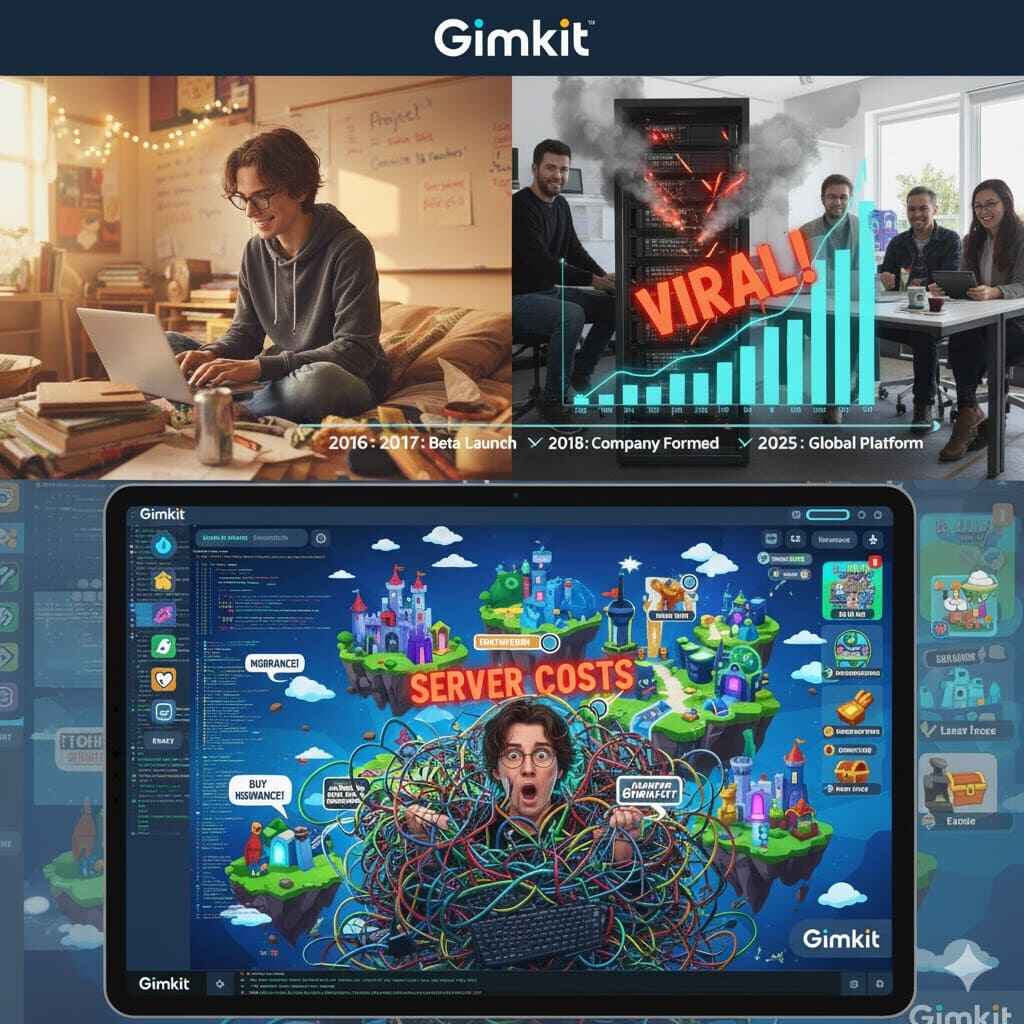
 The moment Gimkit had to stop being “just a project” and become a proper company was in late 2017 to early 2018.
- The Problem: The game went viral fast. Josh’s servers were quickly overwhelmed because teachers loved it and were using it constantly.
- The Solution: To cover the massive increase in server costs, Gimkit needed to start generating revenue; therefore, it needed an official business structure. Gimkit formalized its business structure in the Seattle area around this time.
The Origin Story: One Student’s Frustration
To truly grasp the Gimkit origin story, you have to understand the founder’s motivation. The platform didn’t start with a boardroom plan; it started with the feeling every student knows: boredom.
Frustration with the Status Quo
 Back in 2016, Josh Feinsilber, then around 16 years old, found the existing classroom review tools lacking. They were essentially fast-paced multiple-choice tests. They were fun for a few minutes, but they quickly boiled down to who could click the fastest, not who was thinking the deepest.
Josh, a budding developer, saw a clear need: a game that required strategy, collaboration, and critical thinking—not just speed.
The Birth of “Gimlet”
 The first working prototype, which he initially called “Gimlet” (a name he quickly changed to Gimkit), was his submission for a school project.
His goal? To convince just ten teachers to use it in their classrooms. That was the extent of his “business plan.” He wasn’t aiming to build a global company; he was aiming to build something better for his own class.
Why This Matters: As an educator, knowing the founder’s mindset is critical. It validates why the platform feels so different. Gimkit doesn’t have a corporate feel because it was designed from the perspective of the user—the student. It’s what gives the game modes their depth and keeps student engagement genuinely high.
The Complete Gimkit History Timeline
The evolution of Gimkit is a classic bootstrapped education startup success story—meaning they used their own money (or profits from early sales) to fund growth, rather than taking large loans from big investors. This allowed them to stay true to their mission.
The Foundational Years (2016–2018)
| Date/Year | Event | Significance |
| 2016 | Idea Conception & Coding Begins | Josh starts development as a high school project. |
| Oct 2017 | Gimkit Launch Date (Beta) | First public release. Answers: “When did Gimkit come out?” |
| Late 2017 | Going Viral & Server Overload | Unexpected teacher demand forces the project to transition into a business. |
| Early 2018 | Official Company Formation | Gimkit establishes its legal structure in Seattle to manage subscriptions and growth. |
| 2018 | First Major Updates | Introduction of features like Team Mode and the first major dashboard redesigns based entirely on teacher feedback. |
The Game-Changing Eras (2019–2025)
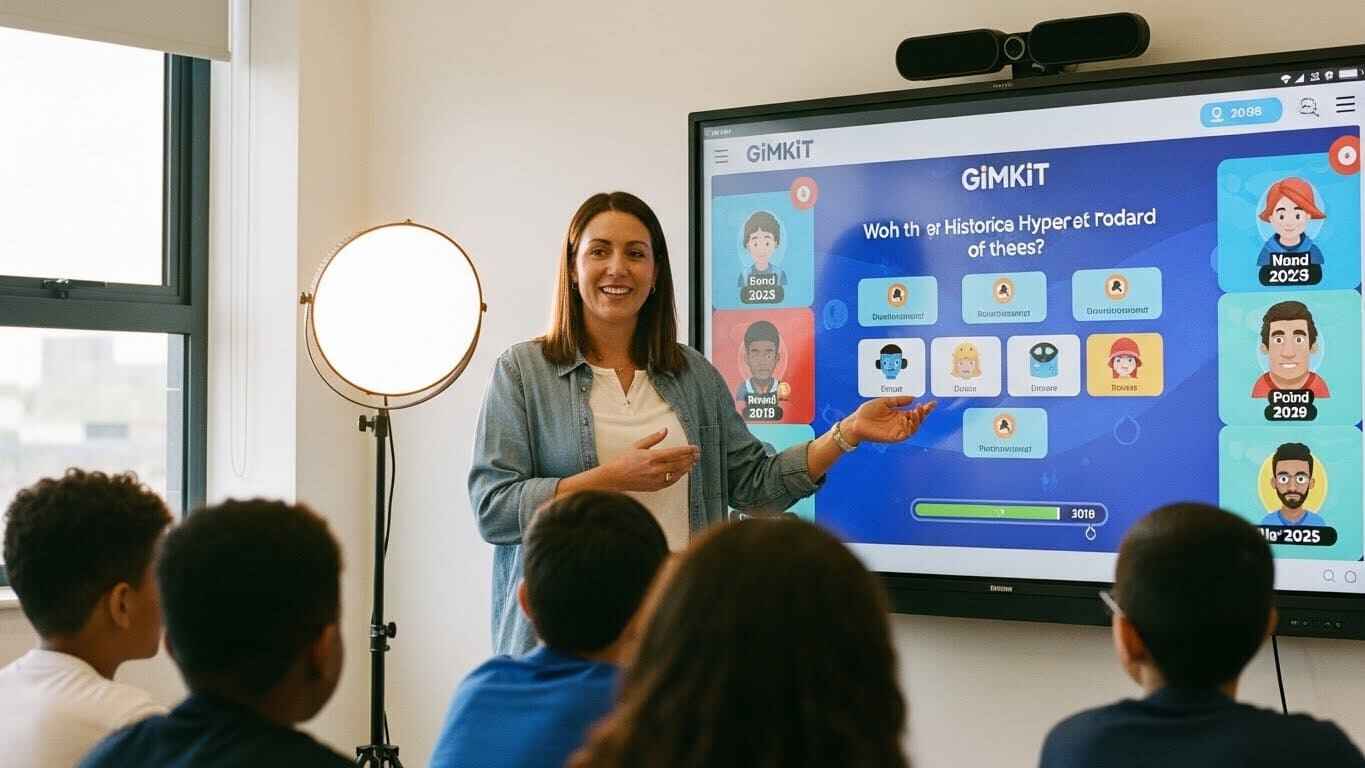 The subsequent years saw Gimkit cement its position not just as a quiz platform but as a full-fledged gaming ecosystem for education.
The Growth and Innovation Phase (2019-2021)
This period answered the question: “How did Gimkit become popular in schools?” It happened through word-of-mouth and the release of major non-quiz modes.
- 2019: Gimkit expanded its core game mechanics, constantly adding new ways to play beyond the initial “Classic” mode, keeping the platform fresh and exciting compared to the static experience offered by many Kahoot predecessors. The difference in design philosophy became starker when comparing Gimkit to its EdTech competitors.
- 2020: The global pivot to remote learning (the “pandemic boom”) saw the teacher adoption rate skyrocket. Gimkit was perfectly positioned to deliver engaging, strategic learning that worked just as well at home as in the classroom.
- 2021: Creative Mode launched. This was arguably the biggest development since the original launch, allowing users (students and teachers!) to build their own custom maps and games from scratch, turning the platform into a true design environment.
Gimkit’s Current Status (2025)
Today, Gimkit is defined by its diverse game modes—from the survival strategy of Don’t Look Down to the collection fun of Fishtopia. It continues to be led by Josh Feinsilber, maintaining the energy and commitment of a student entrepreneur even as the platform rivals massive corporate EdTech competitors.
Who Created Gimkit? The Founder’s Journey
When people search “who created Gimkit,” they’re looking for more than a name; they’re looking for the person behind the vision.
The Unconventional Path to CEO
 Josh Feinsilber’s journey is remarkable because of his age and his deliberate choice to skip the traditional corporate route.
He transitioned from being a high school student coding in his spare time to a full-time founder and CEO immediately after graduation. This dedication allowed him to focus intensely on improving the platform without the distractions or demands of external investors.
- Vision: His core vision remains to create “memorable learning experiences.”
- Company Culture: Gimkit’s continued focus on fast updates and highly responsive teacher communication is a direct reflection of its founder’s beginnings.
I didn’t start using Gimkit until years after its launch, but the fact that it was built by a student who still runs it gives me total confidence in its future. It feels like a tool that genuinely understands the struggle of boring review sessions—which is something a lot of giant, old-school companies miss completely. For a full look at his background, check out our guide: Who Created Gimkit?
Why This History is Important for Teachers
Understanding the answer to “what year was Gimkit created” isn’t just trivia; it’s a form of due diligence for educators.
Legitimacy and Sustainability
- It’s a Sustainable Model: Gimkit’s successful, long-term bootstrapped approach means it generates enough revenue through its Pro subscriptions to sustain itself and develop without constantly chasing giant investment rounds. This translates to stability for you and your classroom.
- It’s Not Going Anywhere: The company’s consistent 8-year history and continued founder leadership are key indicators that it’s a reliable tool you can integrate into your long-term teaching strategy.
Why the Platform Feels So Good
 The initial design mandate was “fun first.” That high school coder’s determination to make learning competitive and engaging is still the driving force behind every new game mode and update. It’s why Gimkit feels like a game your students want to play, not just one they have to play. Check out the full list of features here.
Final Thoughts: The Student-Led Revolution
From a simple desire to fix a problem in his own high school class in October 2017, Josh Feinsilber built something that has become essential for millions of students. That unique spirit—the ingenuity of a young person solving a real-world problem—is the heart of Gimkit’s success.
The best part? Because it was created by someone who still thinks like a student and acts like a developer, we can be confident the next 8 years of Gimkit will be just as exciting as the first.
Your Next Step: Now that you know the history, it’s time to explore the future! Check out our detailed guide on the current game-changer: The Comprehensive Guide to Gimkit Creative to see how far the platform has evolved.
Final Frequently Asked Questions
Is Gimkit still considered an independent EdTech company?
Yes. Gimkit has famously remained bootstrapped and has not accepted large outside venture capital. It remains an independent EdTech startup led by its founder, Josh Feinsilber.
Where exactly is the Gimkit company located?
Gimkit is based in Seattle, Washington area. It operates a small, highly effective team, focusing on remote collaboration and responsive development rather than a massive corporate headquarters.
Will Gimkit ever be sold to a bigger company?
There is no public information or announcement to suggest that Gimkit is planning to sell. Given the founder’s clear commitment to the product's vision and the success of their bootstrapped model, they have the freedom to keep the company independent and focused on the education community.