






















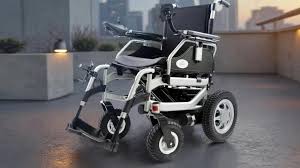
Accessibility is no longer just about ramps and wider doorways. It is about empowering individuals to move freely, confidently, and independently in every environment. At the center of this transformation is the modern 輪椅, which has evolved far beyond its traditional image. Today’s designs combine engineering innovation, ergonomic science, and smart technology to redefine what mobility truly means.
The Evolution of Wheelchair Engineering
The 輪椅 has shifted from being a purely functional device to a highly specialized mobility solution. Early models focused mainly on basic movement, often prioritizing durability over comfort. Modern engineering, however, integrates lightweight materials such as aircraft-grade aluminum and carbon fiber to reduce strain while maintaining structural strength.
Advanced frame geometry allows for better weight distribution, improving propulsion efficiency for manual users and extending battery life for powered models. These changes may seem subtle, but they significantly enhance daily usability, especially for individuals who rely on their 輪椅 for extended periods.
Ergonomics and Personalized Comfort
One of the most impactful developments in modern wheelchair design is personalized ergonomics. Today’s seating systems are carefully engineered to support posture, reduce pressure points, and prevent long-term health complications.
Adjustable backrests, pressure-relief cushions, and customizable seat depths allow users to tailor their 輪椅 to their unique body structure. This level of personalization reduces the risk of back pain, shoulder injuries, and circulation problems. For many users, improved comfort translates directly into longer, more active days and greater social participation.
Smart Technology Integration
Technology is reshaping accessibility in unprecedented ways. Smart 輪椅 models now feature programmable controls, obstacle detection systems, and terrain-adaptive suspension. Some even integrate with smartphone apps, allowing users to monitor battery levels, track usage, and adjust performance settings.
Power-assisted wheels have also emerged as a hybrid solution, offering manual users extra propulsion support when navigating slopes or longer distances. These innovations reduce fatigue and make previously challenging environments more manageable.
In urban settings, smart navigation systems and enhanced maneuverability enable users to navigate tight spaces such as elevators, public transport, and crowded sidewalks with greater ease. As cities become more connected, mobility devices are evolving alongside them.
Lightweight and Portable Solutions
Portability has become a defining feature of contemporary wheelchair design. Foldable frames, detachable components, and compact storage systems make transportation easier than ever. For individuals who travel frequently or commute daily, a lightweight 輪椅 can dramatically simplify logistics.
Airline-approved battery systems and travel-friendly electric models further expand independence. Instead of planning life around mobility limitations, users can integrate their wheelchair seamlessly into personal and professional routines.
Design Aesthetics and Social Perception
Another important shift is the emphasis on aesthetics. Modern wheelchairs are designed with style in mind, offering sleek frames, color customization, and streamlined silhouettes. This evolution challenges outdated perceptions and promotes mobility devices as empowering tools rather than symbols of limitation.
When users feel confident about how their 輪椅 looks and performs, it positively influences self-image and social interaction. Design, in this sense, becomes both functional and psychological support.
Expanding Accessibility Beyond the Individual
Innovative wheelchair design also influences broader infrastructure. As mobility devices become more agile and adaptable, public and private spaces are responding with improved accessibility standards. Businesses, schools, and transportation systems increasingly consider user-friendly layouts that accommodate modern mobility solutions.
The transformation of the wheelchair reflects a larger societal commitment to inclusion. Accessibility is no longer reactive; it is proactive and integrated into planning and design.
Conclusion
Modern wheelchair design is transforming everyday accessibility by merging engineering, comfort, and technology into cohesive mobility solutions. From lightweight frames to smart navigation features, today’s 輪椅 empowers individuals to move with greater confidence and independence. As innovation continues, the focus remains clear: enhancing quality of life through thoughtful, user-centered design. Accessibility is not just about reaching a destination; it is about redefining what is possible along the journey.