





















Hair loss affects millions of people worldwide and can significantly influence confidence and quality of life. Modern medical solutions such as hair transplantation have become popular options for individuals experiencing permanent hair loss. However, understanding the causes and evaluation process is essential before considering treatment. Medical specialists carefully analyze hair loss patterns, underlying health conditions, and scalp health to determine whether a patient is a suitable candidate for a transplant procedure. Hospitals and specialized clinics, such as Liv Hospital, provide advanced diagnostic tools and treatments that help patients understand the root causes of hair loss and the most effective solutions.
Hair transplantation is not simply a cosmetic procedure. Physicians must first determine why the hair loss occurred and whether it is permanent or temporary. This detailed assessment ensures that the treatment plan provides long-term results and protects the patient’s scalp health.
Understanding Hair Loss Before Hair Transplant
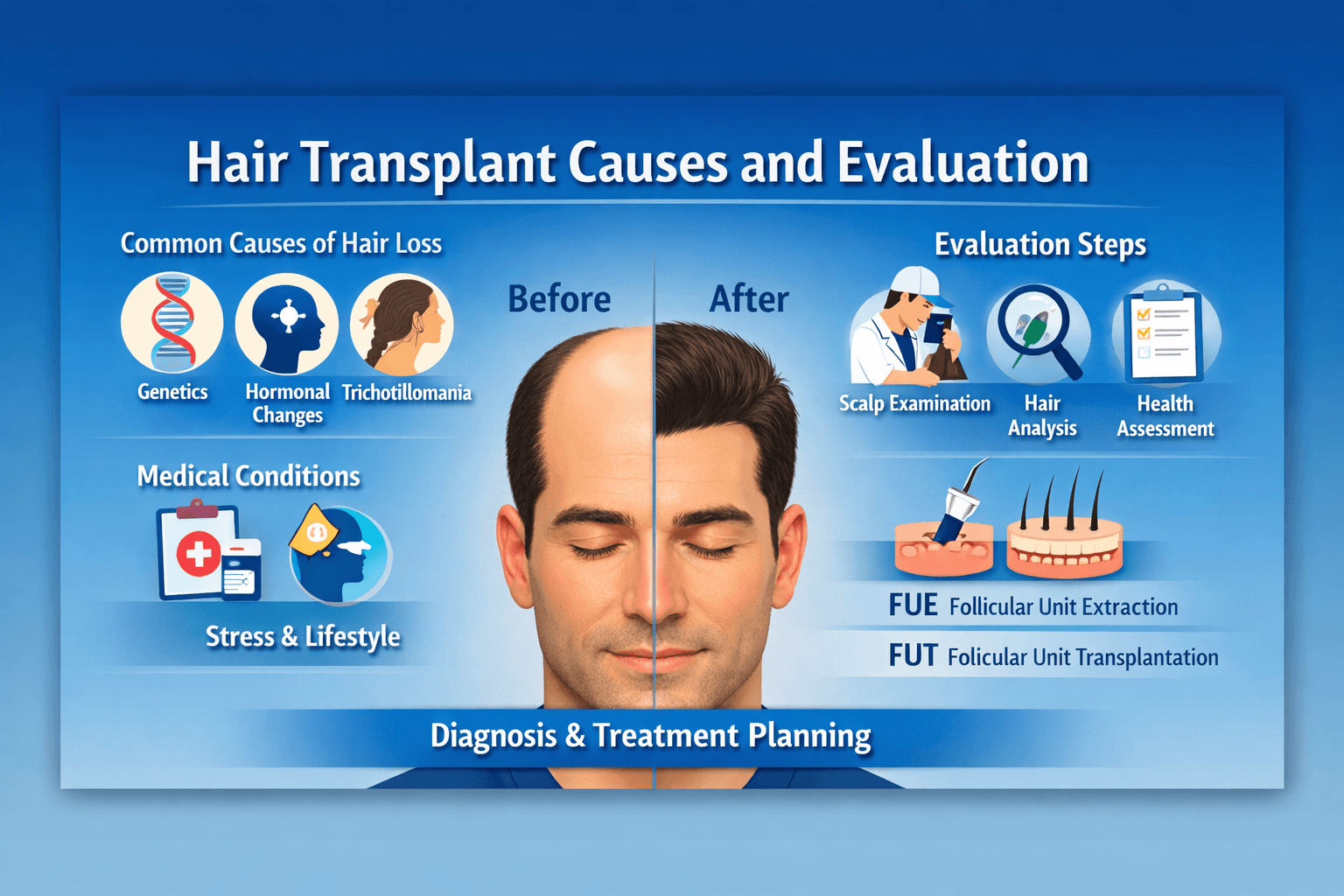
Hair loss can occur due to several medical, genetic, or behavioral factors. The most common cause is androgenetic alopecia, often referred to as male or female pattern baldness. This condition is hereditary and leads to gradual thinning of hair, usually starting from the temples or crown.
Other medical causes may include hormonal imbalances, autoimmune diseases, nutritional deficiencies, or stress-related conditions. Certain medications and medical treatments can also trigger hair loss as a side effect. Physicians also evaluate lifestyle factors such as poor diet, smoking, and excessive stress because these elements can weaken hair follicles over time.
Another condition that may lead to hair loss is Trichotillomania, a psychological disorder in which individuals repeatedly pull out their own hair. This condition requires psychological evaluation and treatment before considering any surgical procedure.
What Is Hair Transplantation?
Hair transplantation is a surgical technique that moves healthy hair follicles from a donor area, usually the back or sides of the scalp, to areas experiencing hair loss. The transplanted follicles continue to grow naturally after the procedure.
Two widely used techniques include:
Follicular Unit Extraction (FUE)
Individual hair follicles are removed from the donor area and implanted into the thinning areas. This method leaves minimal scarring and offers a quicker recovery time.
Follicular Unit Transplantation (FUT)
A small strip of scalp is removed from the donor area, and the follicles are extracted and transplanted. This method can transplant a large number of grafts in one session.
Specialized medical centers such as Liv Hospital use advanced technologies and experienced surgical teams to ensure safe and effective procedures.
Causes of Hair Loss That May Require Evaluation
Before recommending a transplant procedure, doctors analyze the underlying causes of hair loss. Some causes may require medical treatment rather than surgery.
Genetic Factors
Genetics remains the most common cause of hair loss. If family members experience baldness, individuals may inherit similar hair patterns. In these cases, transplantation may provide long-lasting cosmetic improvement.
Hormonal Changes
Hormonal fluctuations related to aging, thyroid disorders, pregnancy, or menopause can contribute to hair thinning. Doctors must evaluate hormone levels before deciding on treatment.
Medical Conditions
Certain illnesses can damage hair follicles. Conditions such as scalp infections, autoimmune diseases, or chronic illnesses may cause temporary or permanent hair loss.
Behavioral Conditions
Some individuals develop habits such as pulling or twisting their hair due to stress or anxiety. This behavioral disorder is medically known as Trichotillomania. Proper diagnosis and psychological treatment are necessary before any hair restoration procedure.
For a more detailed medical explanation about this condition and how specialists diagnose it, you can read the detailed guide on hair transplant causes and evaluation.
Evaluation Process Before Hair Transplant
Before performing surgery, doctors conduct a thorough examination. The evaluation stage ensures that the procedure will be safe and effective.
Medical History Review
Doctors begin by reviewing the patient’s medical history. They ask about medications, previous surgeries, family history of hair loss, and any underlying health conditions.
Scalp Examination
A detailed scalp examination helps specialists evaluate hair density, scalp condition, and donor area strength. Tools such as dermatoscopes or digital scalp imaging may be used to examine follicles closely.
Hair Density Analysis
Hair density measurement determines whether enough healthy follicles exist in the donor area. A strong donor region is essential for a successful transplant.
Psychological Assessment
In cases where hair loss results from behavioral conditions such as Trichotillomania, psychological evaluation is recommended. Treating the underlying condition prevents further hair damage after transplantation.
Treatment Planning
Once the evaluation is complete, doctors design a personalized treatment plan. This plan includes the number of grafts needed, the appropriate surgical technique, and the expected recovery timeline.
Patients seeking professional guidance can explore advanced hair restoration services offered by Liv Hospital, which provides international healthcare solutions and specialized hair transplant procedures.
Who is a Good Candidate for a Hair Transplant?
Not everyone experiencing hair loss qualifies for a transplant procedure. Ideal candidates typically have:
Healthy donor hair at the back or sides of the scalp
Stable hair loss patterns
Good overall health
Realistic expectations about results
Individuals with temporary hair loss caused by stress, medications, or illness may recover naturally without surgery. Therefore, accurate diagnosis remains a crucial step before treatment.
Recovery and Post-Procedure Care
Hair transplant recovery generally takes a few weeks. During the first few days, mild swelling or redness may appear around the treated area. Doctors usually recommend avoiding intense physical activity and direct sun exposure during the early healing phase.
New hair growth typically begins three to four months after the procedure. Full results become visible within 9 to 12 months as transplanted follicles grow naturally.
Following medical advice and maintaining proper scalp care significantly improves the long-term success of the transplant.
Final Thoughts
Hair transplantation can be a highly effective solution for people dealing with permanent hair loss. However, identifying the underlying cause and completing a thorough evaluation is essential before undergoing the procedure. Medical specialists assess scalp health, hair density, medical history, and psychological factors to ensure the best possible outcome.
For individuals interested in learning more about health, lifestyle, and wellness topics that support overall well-being, resources such as live and feel are also valuable.